In Pictures: Britain’s Whirling Wader Spectacular

On a stretch of Norfolk’s wild coast I place one boot in front of the other in total darkness. Part of a silent, pre-dawn pilgrimage of more than two hundred people marching towards mudflats in the hope of seeing something sensational.

It’s a chilly October morning. The markers of sky and ocean threaten purple as the first traces of daylight create bright silver lines of lapping shoreline. The tide is rising. I brace against a blustery wind not loud enough to drown out a very distinct sound. Through a cloak of navy shadows the wibbles and churls of hundreds of thousands of wading birds are unmistakable. At moments a mellow backdrop to our procession then, on occasion, a deafening climax of calls and shrills broken and tossed around by the boisterous honks of geese.


Every year on specific dates around the Autumn and Spring equinoxes, Snettisham plays host to one of wildlife’s great wonders. Beautiful facets of the natural world combine: The extreme speed of a rising estuary tide; the migration of bird species south from their Artic breeding grounds; the plentiful food sources of the UK’s shorelines; and lastly, the ever changing times of dawn as summer becomes winter and winter becomes spring.

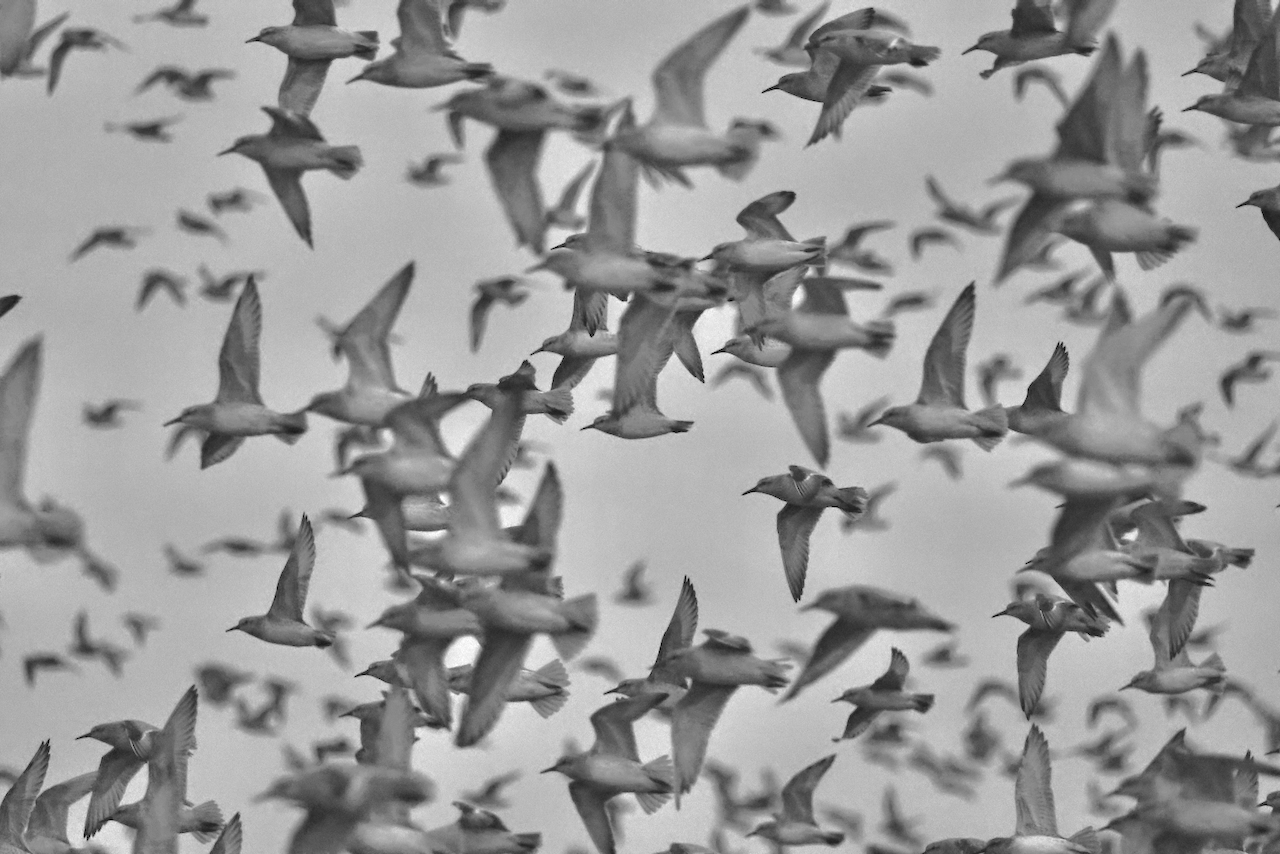
The result? A rapidly shifting shoreline that throws thousands of wading birds into the air at once. Red Knot, Oyster Catchers, Black and Bar-tailed Godwits, Sanderlings, Curlews, Lapwing and many more. They fly in unison, forging swirling shapes across the dawn skies at Snettisham for hours. Moments that are known as The Snettisham Spectacular.
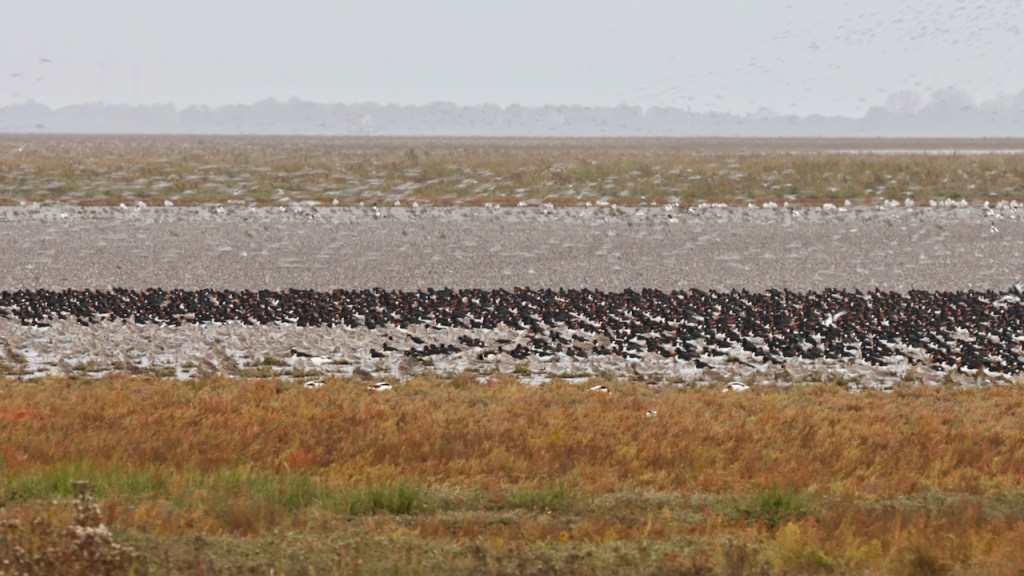
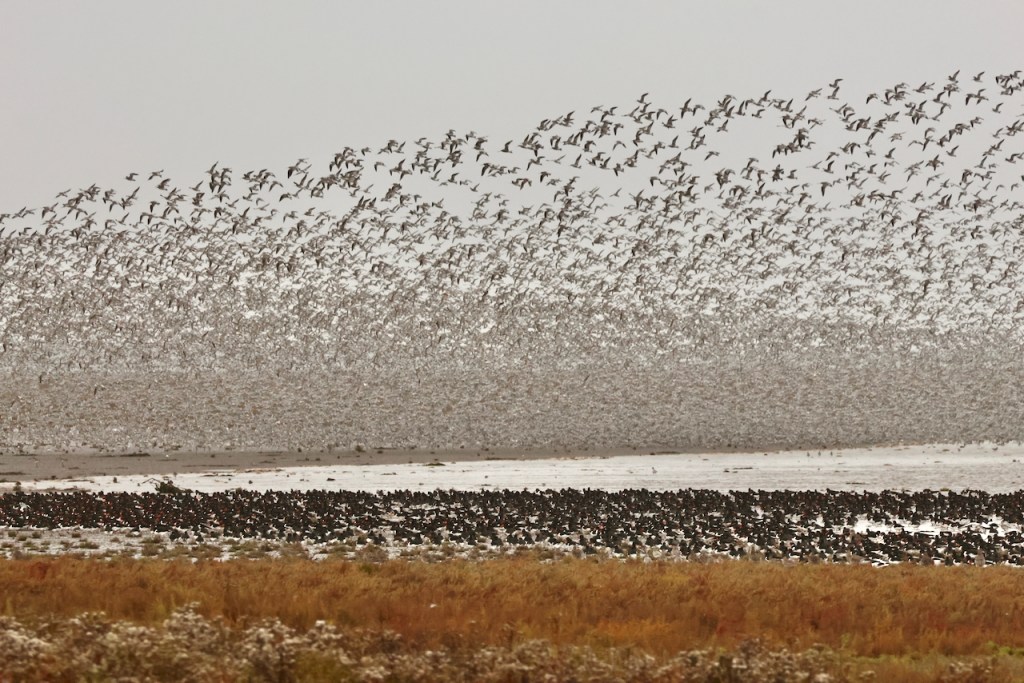
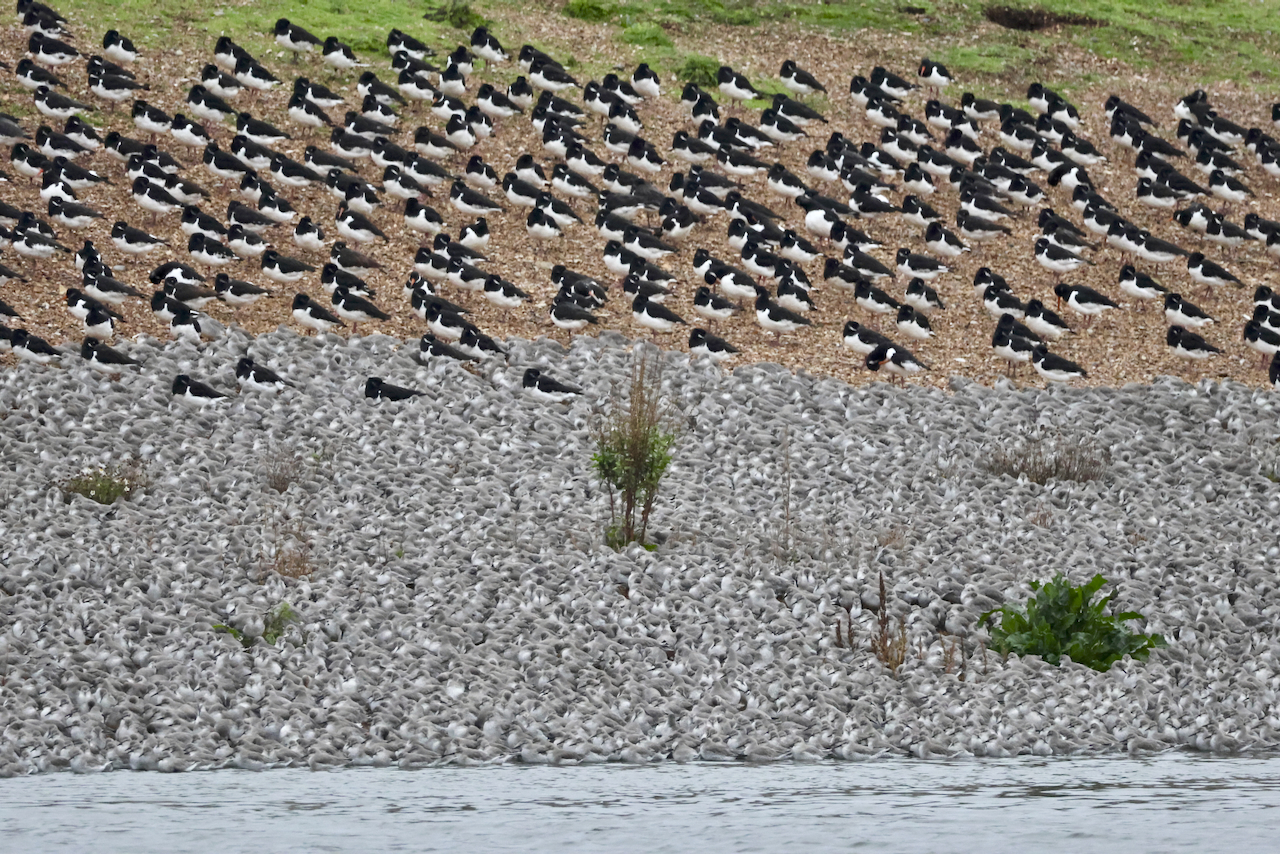
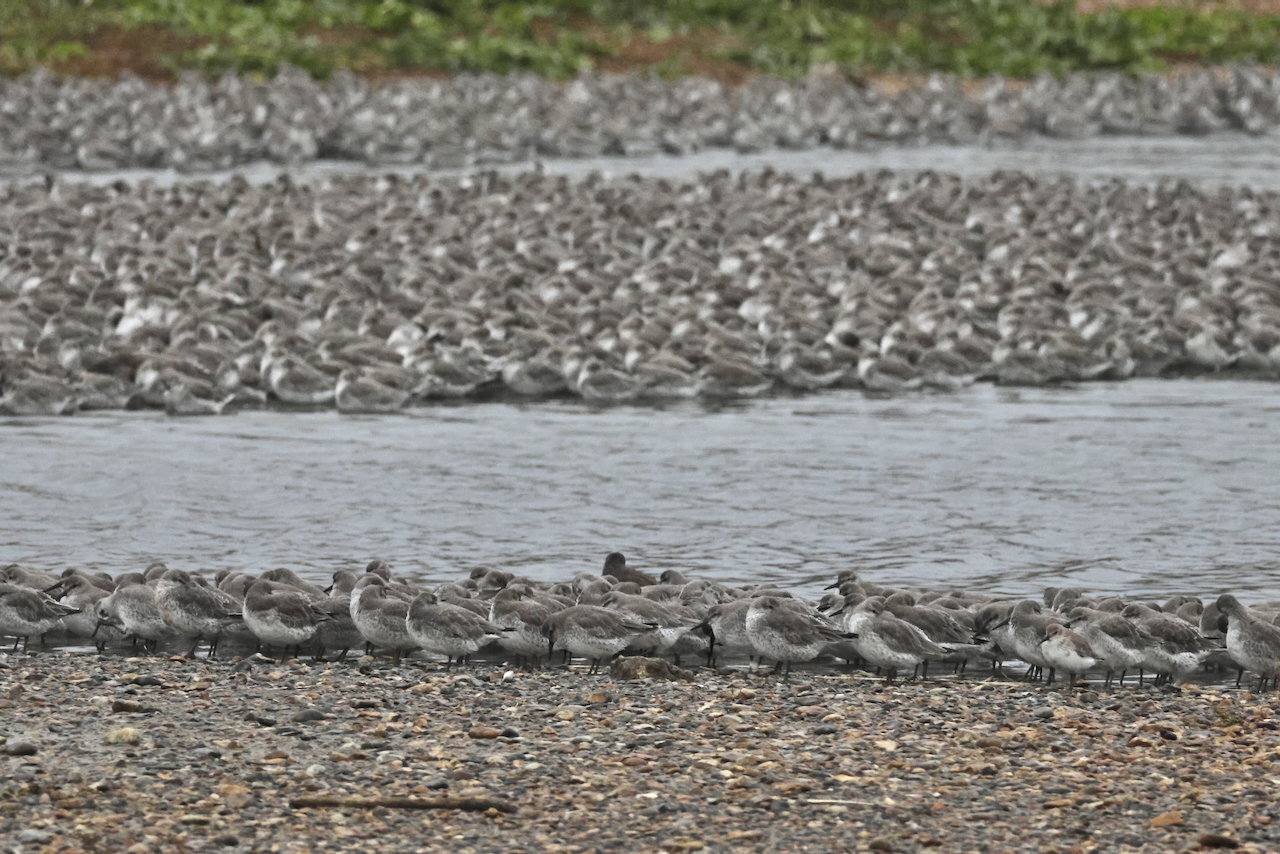
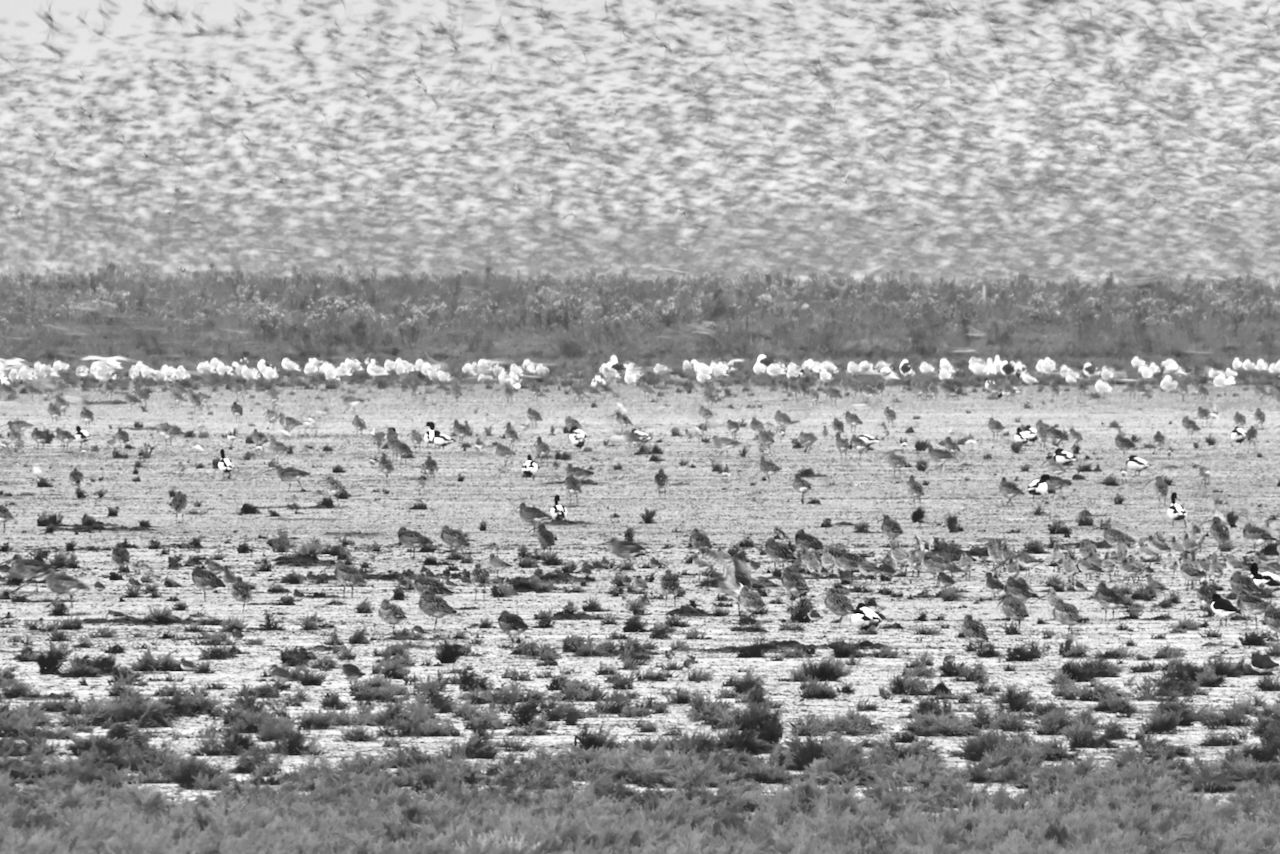
Huge groups of shore birds gather closely on the remaining sections of estuary
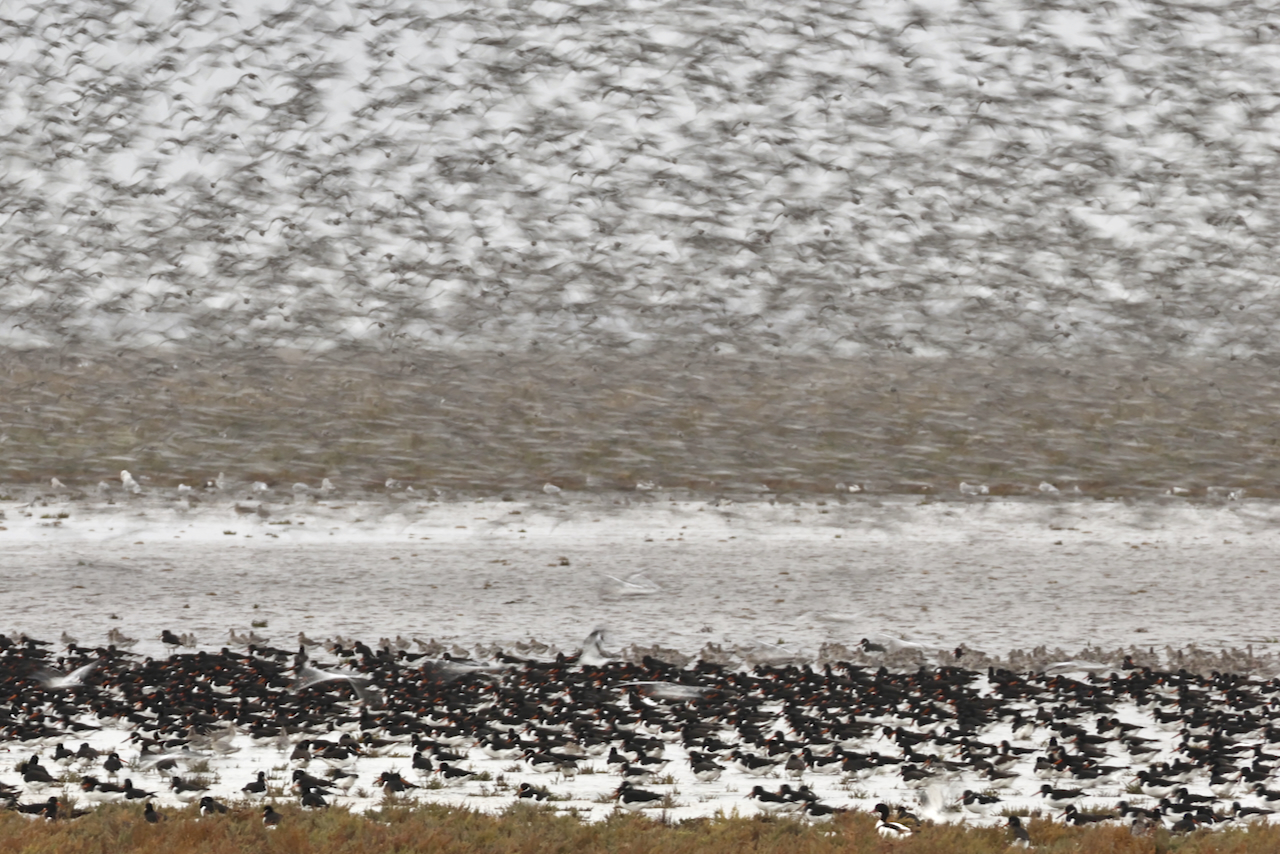
As the tide rises, the first groups of waders are forced to flee into the air

Red Knot, a stunning medium sized wader that breeds on the Artic tundra is generally considered to be the star of the show. These photos show the knot’s size and shape relative to more well known oyster catchers as well as a closer view of their feathers. In Autumn the knot show their winter plumage; A neat grey and white compared to the salmon pink of their breeding colours.

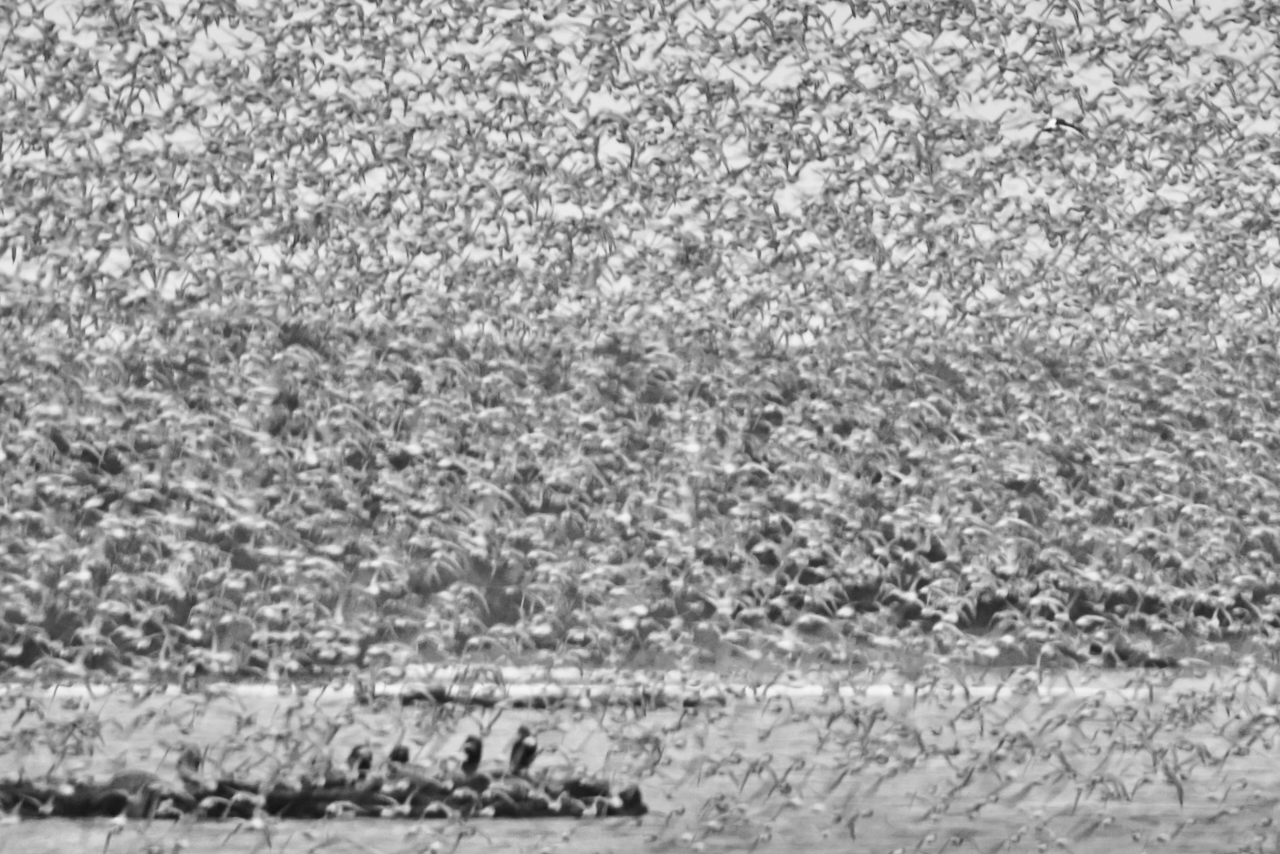
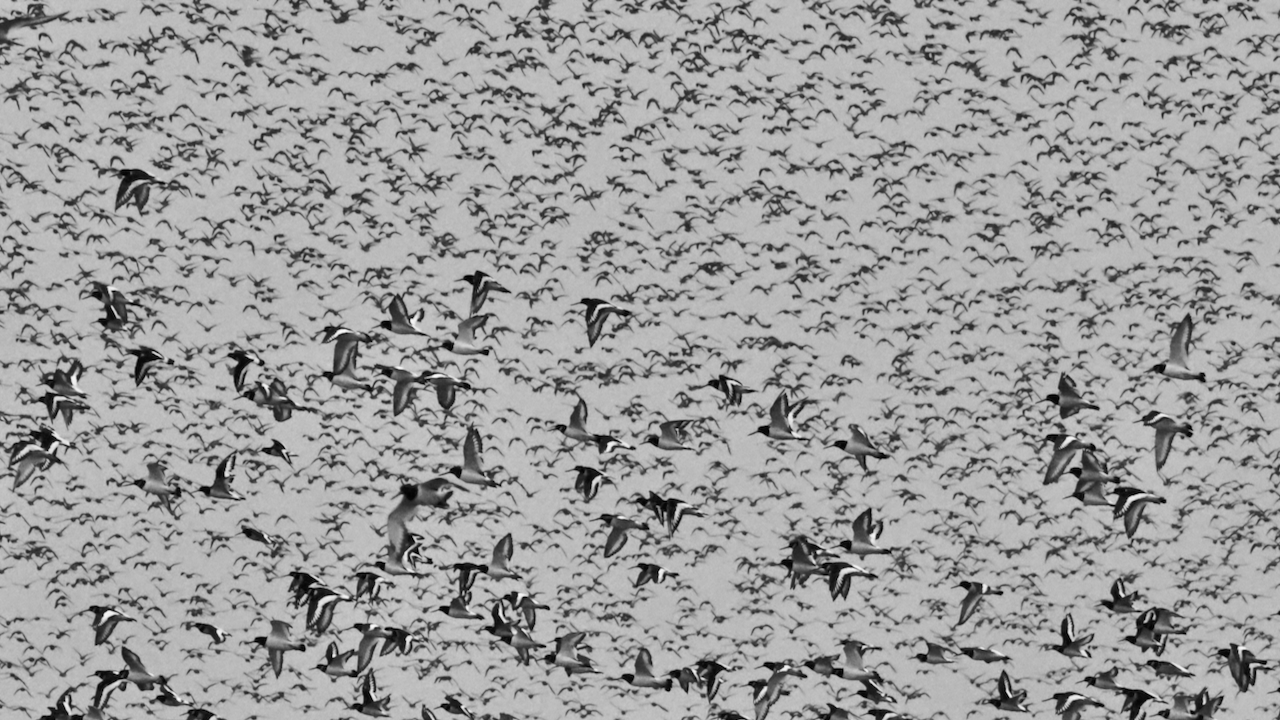
As the high tide peaks, the skies fill with waders

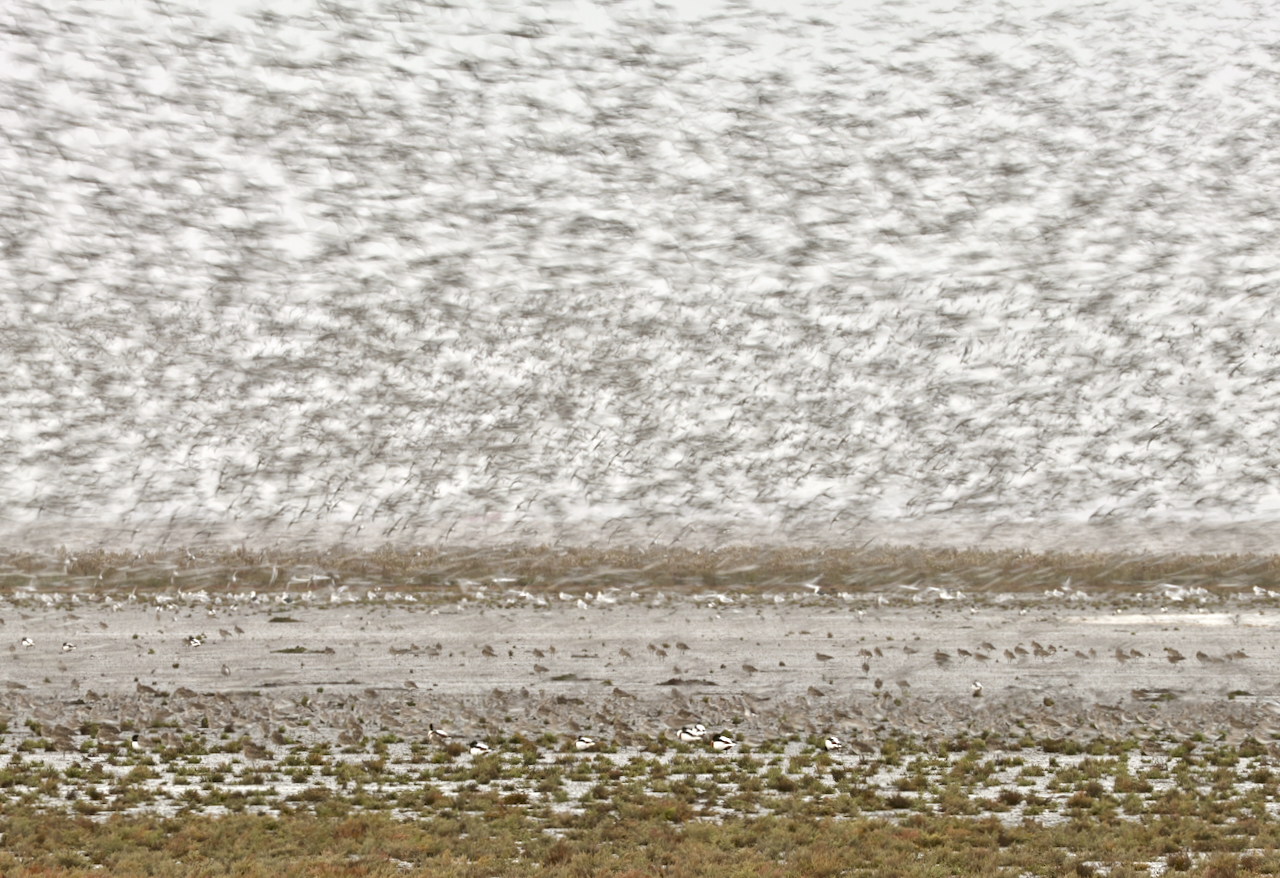
My experience of The Spectacular went beyond my imagination. The noise, the sheer volume of birds in the air and the sense of companionship from others gasping with me was fantastic enough. Although above all of this, I was astounded by the continual sense of natural motion around me. The sea encroaching onto land without mercy, the patterns that different bird species made as they were flushed upwards and the constant swirling of waders jostling for position is something I’ll never forget.

It was more important to me to capture this movement rather than achieve exact identification of each animal. I slowed my camera’s shutter speed and slowed myself, as the knots swelled again ready for their encore.
Birding & Beyond In The Gambia

“Their screeches in the night made me believe my mother”. Lamin reminisced as he navigated the dried clay of Kotu Creek. “As a child you heard the eagle owls. It was a bad omen.”

I smiled warmly as I followed him. Now an expert bird guide in his early forties, he was still very much Mandinka. A boy of the inland farms along the River Gambia. Although while he was once fearful of the animals around his house, his concerns now grew for their rehabilitation and protection in rural communities that are still entrenched in superstition.

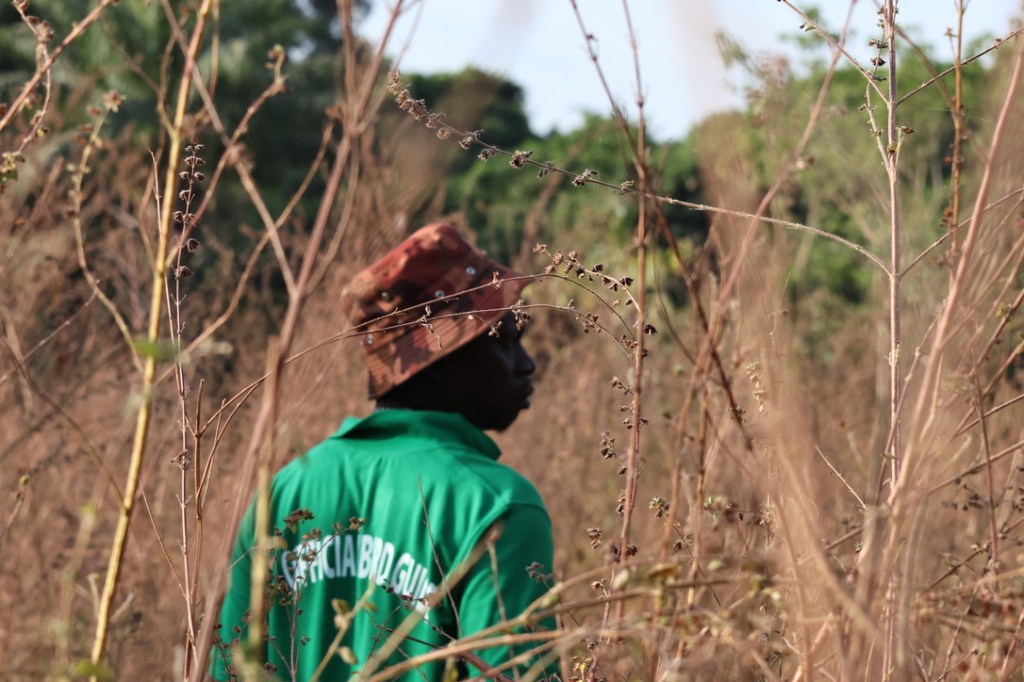
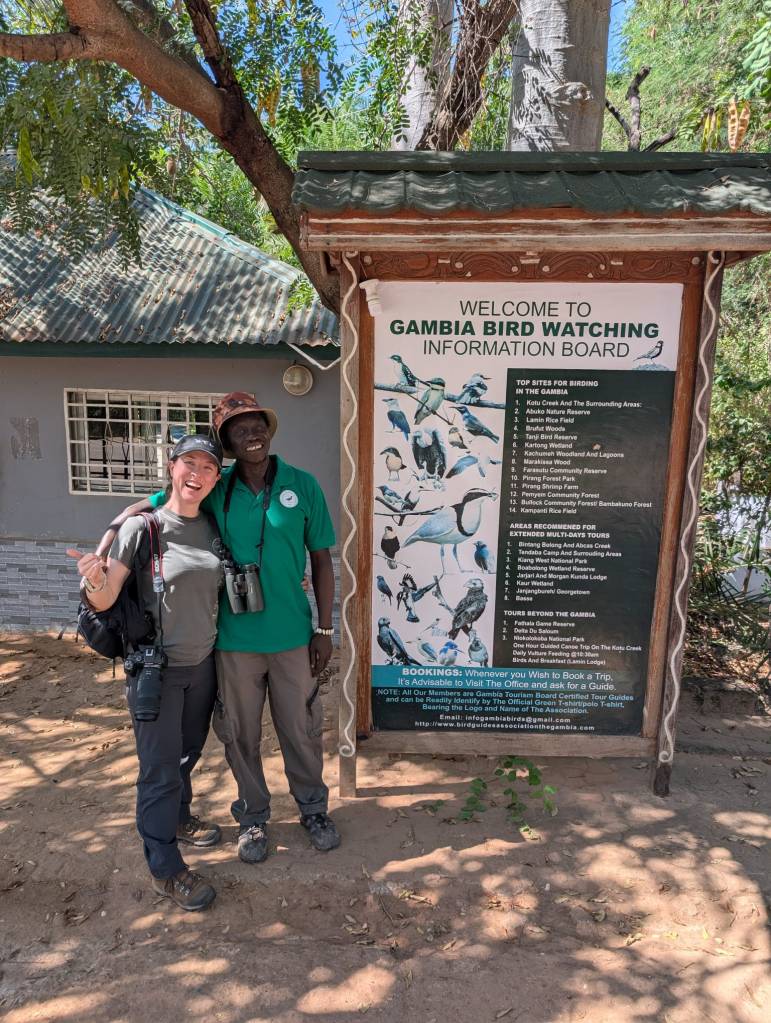
Lamin searching for birds in Kotu Creek

Many birds in Gambia hold negative associations that can limit enthusiasm for their defence. Vultures as the harbingers of death, owls and nightjars carrying bad luck in flight, and the ubiquitous Senegal Coucal as a keeper of snakes in its nest. Others, like the Red-billed Fire Finch and Saddle-billed Stork are thought to bring health and wealth. A mixed bag of luck for a phenomenal array of birds that most countries Gambia’s size could only dream about.

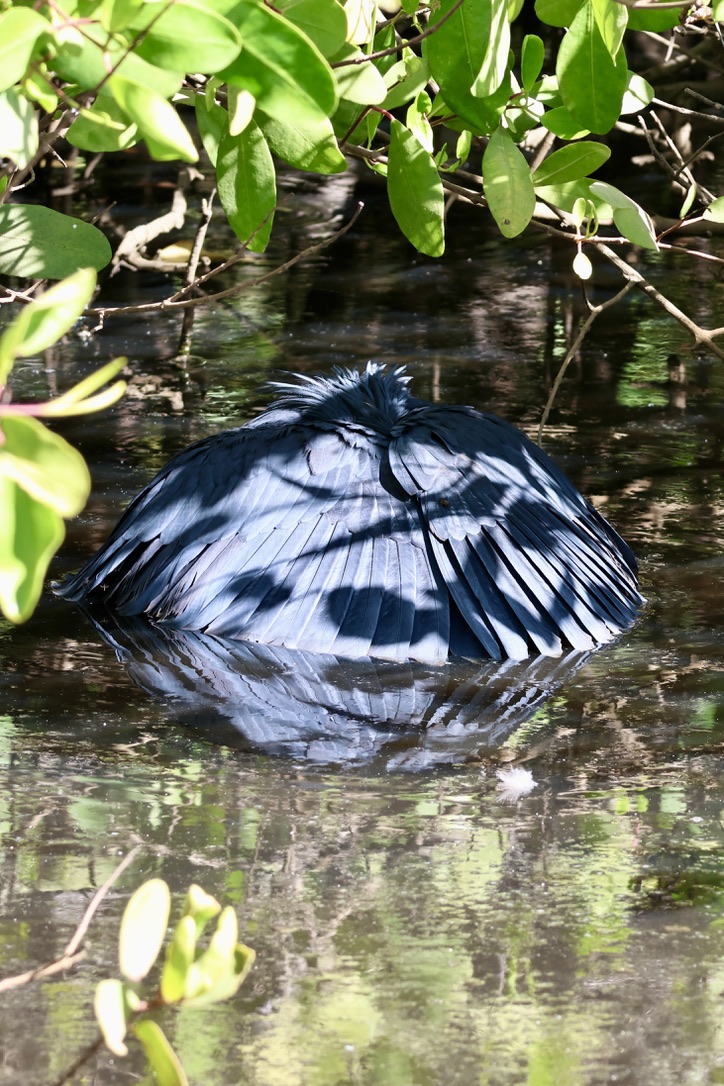
I explored with Lamin three times over two weeks. First, into the coastal creek next to my hotel. Here we watched Black Herons perform their famous fishing dance; Giant Kingfishers drop into the still water like darts hitting the bullseye; and Blue-cheeked Bee-eaters swirl high overhead catching flies on the midday thermals.

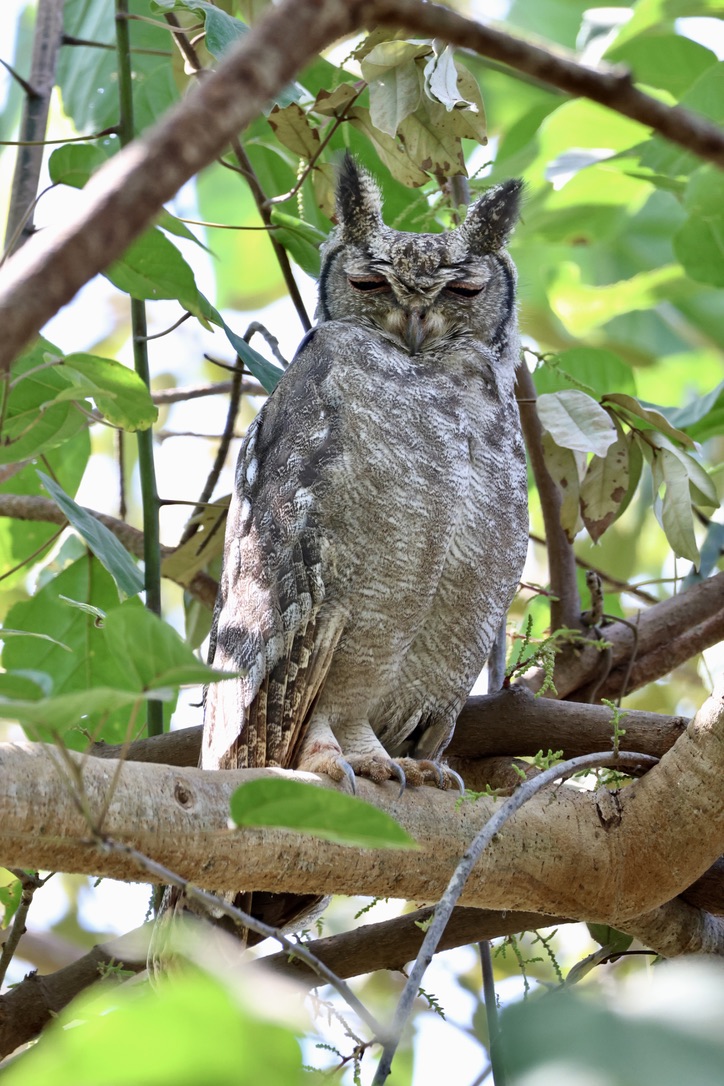
Our second excursion threw up cooler temperatures and softer light. A sunrise walk around Mandinaba rice fields, followed by very specific searches for feeding birds and resting owls in Farasuto Forest and the arid grasslands near Pirin. Here, Purple Turacos nestled, almost invisible in high trees; fantastical looking bearded barbets swooped their route along single tree-lined paths; and glamorous warblers, flycatchers and kingfishers kept council in low-slung shrubs.

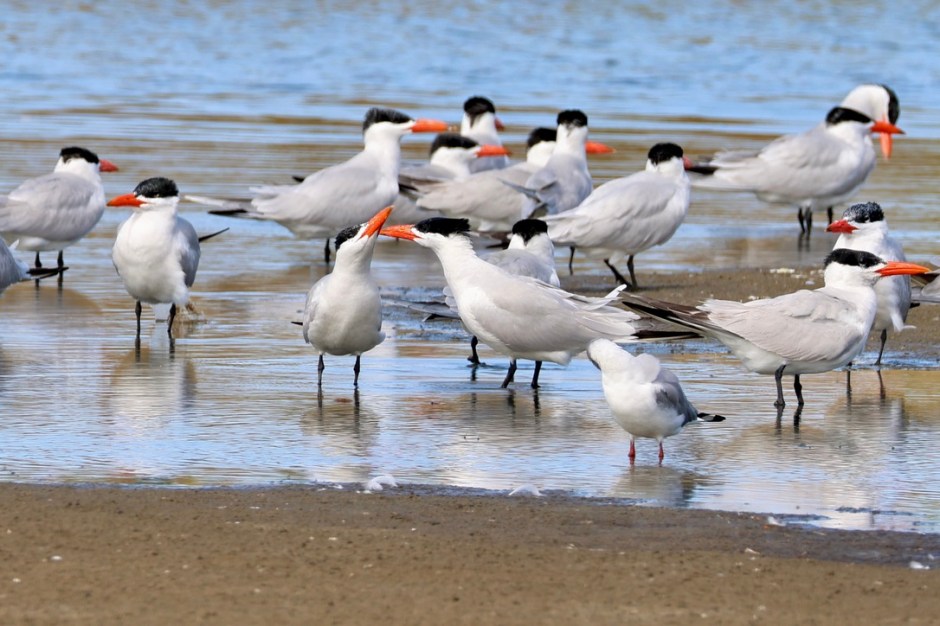
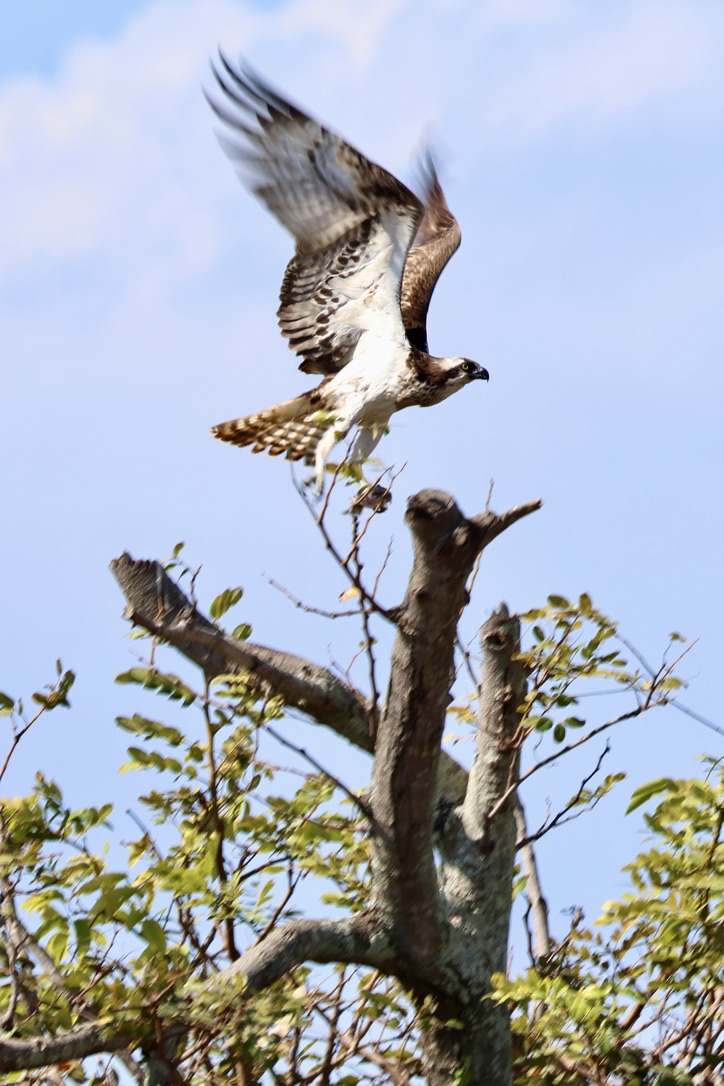
Our final day together, we spotted around Tanji coastal reserve and surrounding wetlands. Its mud already crisping over at the edges into dry season. There, ospreys hunted the waters. Their wings like barn doors scooping air as they rose, clawing fish away from prying eyes. In fact, it was rush hour in the skies. Caspian terns, the world’s largest, darted and dipped together alongside pelicans, pigmy cormorants and countless egrets. In between these giants, a few types of swallow darted and flicked, catching insects caught up in the movement of larger wing beats.

Lamin’s passion for the natural world bounced out of his body as bundles of nervous energy. Quick steps to catch up with flight, abrupt hissing to focus on any birdsong and excited stories of the ongoing partnership between the UK and Gambia, as they look to protect birds that mean so much to both countries. Long before the existence of the RSPB, Gambia’s Birding Association, Chris Packham’s visits and the recent surge in eco-tourism, Britain to West Africa was a flyway for many migrating birds.

Although what happens next is far bigger than the birds, or kuno as they are called in Mandinka. Gambia is at a crossroads. With a general election in 2026, its people are highly charged with democratic responsibility and equally ready to take it. The country’s steadily growing GDP depends increasingly on tourism, while subsistence farming and agriculture still support over three quarters of the population and so, the usual challenges arise. All development isn’t good development. Not everything parcelled up as ‘progress’ will be in the best interests of Gambians and indeed, their wildlife.

Lamin was more than a bird guide. As he became a friend I realised that he personified this change. Still Mandinka. Tied to his local community roots but not necessarily religious nor superstitious. Outspoken and ambitious on matters of equal education for women and job opportunities for young people in both coastal and inland towns. Embedded in the birding community but with an innate awareness of nature and seasons that only comes from generations of farming the land.

Sharing wild moments with Lamin gave me more than new birding knowledge. It offered me a window into his perspective. What work’s well in his world and what he wants to improve. Many years before, against his father’s wishes, Lamin’s mother had pushed all her children into school. Lamin was most proud of the fact he had found a job that was also his love. Purpose that most of us spend decades chasing.

“Now all I need is a girlfriend eh!” Lamin’s chuckles crackled through the stillness of the warm afternoon along the creek, as we strolled through its high grasses swaying in the Atlantic breeze. Wire-tailed swallows danced above and a Blue-bellied Roller, barely there in the shade of a large Boabab tree, watched us watch the birds.