A train journey from Málaga to Madrid takes in Roman, Moorish and modern Spain. A delight of food, flamenco and often forgotten histories.
Despite the Romans’ reputation, it took them a while to conquer the Iberian Peninsula. Moving south over several centuries, they built a network of roads connecting Cádiz in the western Mediterranean with modern-day Catalonia. They made Emerita Augusta (contemporary Mérida) their capital before another wave of conquerors, the Visigoths, arrived from the north.
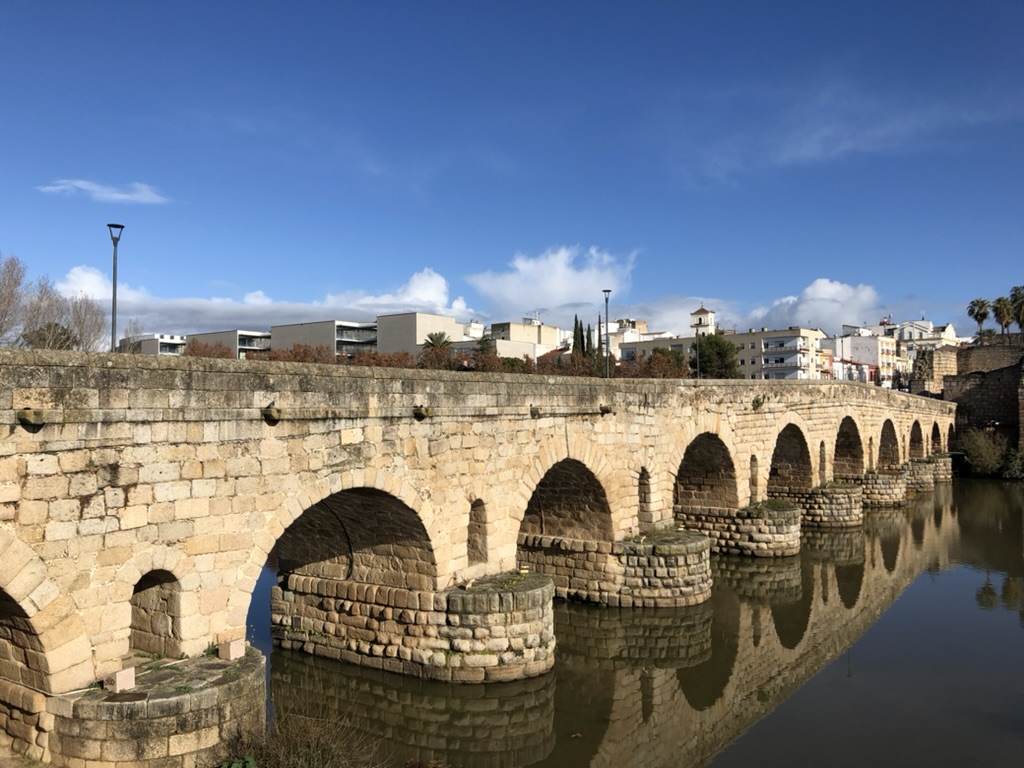
Tumultuous Visigothic rule ended when the Moors invaded in 711AD. They were intent on taking the entire peninsula from the south and more or less succeeded. At its peak, the Caliphate bled into Spain’s most northern provinces, with its epicentre of power stretched across today’s Andalucía. Granada was the final city of Al-Andalus to fall in 1492, as Spain’s rulers looked to the Atlantic for new territory to conquer.
In 2021 I traced a route that both shaped and shows the shape of today’s Spain: Roman roads, Moorish expansion, Ferdinand and Isabella’s Reconquista and the civil war that led to Franco’s dictatorship. Like a tapas-laden table, my trip pieced together Spain’s identity, while I was left wanting more.
Málaga: An Introduction
The preamble to my very own book of Spain is more known for its coastal resorts. So I take one last look at the sea before heading into the city to explore its ancient Phoenician walls, roman-era amphitheatres and the first Alcazaba of my journey. This example of Moorish architecture will repeat with increasing grandeur each day I move north. I visit Picasso’s birthplace and consider the artist he grew into. My mind jumps ahead to the ticket I’ve booked to see his Guernica. A entire record of the the pain inflicted by Spain’s civil war on a single canvas.
Málaga also brings me into Spain’s rhythm. I’m out early to make the most of soft December light. I devour large meals at lunch. Then take siestas to the rumbling narration of TV’s Grandes Documentales nature show. Each evening doy un paseo. I take a stroll. Grazing on ibérico ham, marinated anchovies or the city’s signature cold soup; Ajoblanco. On the third day my bus turns inland between mountains that hug the Costa del Sol, direct to Granada.
Granada & Córdoba: The Zenith Of Moorish Spain
I feel silly starting at the end. Although I know that the Alhambra Palace – the final stronghold of the Moors in Spain – is the best place to understand just how successful they were. From its ramparts, I have uninterrupted views of Granada. The perennially white-washed Albaicín. Sacromonte and its flamenco caverns. The monolithic cathedral. A statement piece commissioned by Ferdinand and Isabella shortly after their expulsion of the Moors and subsequent Inquisition.
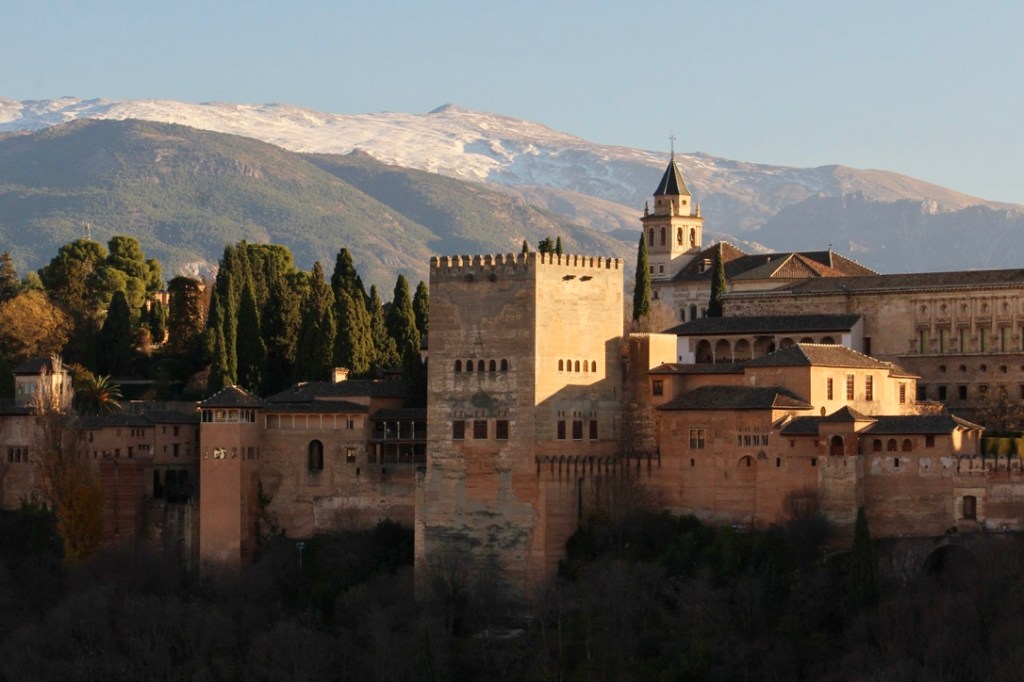
From my tower, I’m even able to map the area’s natural history. The snow-capped Sierra Nevada almost diminishes the formidable palace. Below, an icy River Darro runs through the city centre. The Roman’s river of gold now only carries dancing December sunlight past the Albaicín’s medieval iron doors.
I succumb to the colder climate. I take my time over hot garbanzos (chickpea) stews and morning churros with my café con leche (flat white). Hours slow down as I watch dance groups salsa in the doorways of renaissance mansions and families prepare for Christmas at the markets around the cathedral, once the city’s mosque.
At risk of losing myself in a Moorish romance, I arrive in Córdoba. Al-Andalus was ruled from here. Trade and literacy thrived, wealth built and with it, architectural wonders found nowhere else in the world. In fact, I discover a city so jam-packed with historical importance that UNESCO has created one mammoth site at its centre.
I spend a morning in La Mezquita. An entire day in its surrounds. I spin into shafts of rainbow light in between its infinite arches. I’m sure no building demonstrates a country’s early evolution as clearly. Over a millennium this has been an ancient church, the grandest mosque in the Muslim world and a christian cathedral. Visigoths repurposed roman columns, Emirs built upon them and christian conquerors were uncharacteristically sensitive in their adaptations. Lastly a gold-encrusted catholic centrepiece pierced La Mezquita’s heart during the Renaissance. Making it one of the most unique buildings on the planet.
La Mezquita like the tight bud of an early rose, is the centrepiece of opening petals showing Córdoba’s eras. Roman roads, bridges and theatres. A Jewish Quarter holds its sombre tales as subtle references from the pavement tiles to the high ceilings of miniature synagogues. The Guadalquivir River flows into surrounding countryside and I trace its banks throughout my stay. I spot kingfishers and cormorants on its green islands, imagining what it looked like in roman times as a functional gateway for Mediterranean trade.
Seville: Quintessential Andalucía
If I was in the weeds of Moorish Spain the week before, then Seville plucks me out. I remember the Spanish phrase Para picar: To nibble small plates of different food. Seville is this. A little bit of everything all at once.
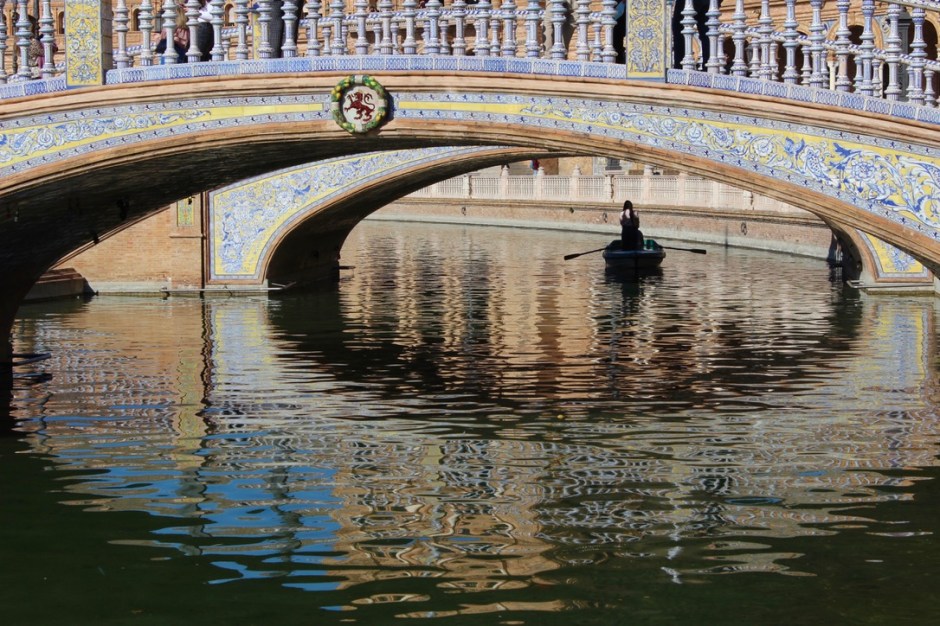
I still linger within its Mudéjar architecture. The Alcazaba blends gothic, islamic and baroque styles into dreamlike kaleidoscopes of dripping stars. Although I also spend a morning in the early 20th century Plaza de España. A sweeping construction sporting a ceramic who’s who of Spain. I beeline to the tiles that show the route I’ve travelled so far and where I’m headed next. I love it. It’s utterly unique and shiny in the lemony-low sun.
I slog to the top of La Giralda. The largest gothic church on earth. Its shadow passes ominously over rooftop pools in nearby streets. Downstairs I pass the resting place of Christopher Columbus. Once a Spanish hero, now considered one of history’s most contentious characters.
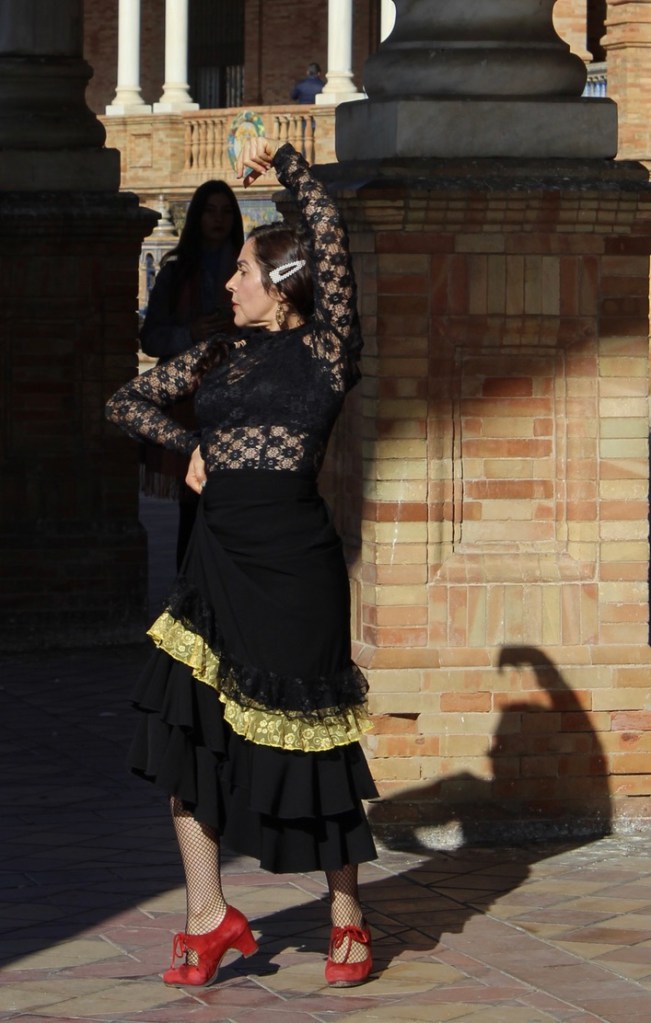
By now I don’t follow a Spanish rhythm. The rhythm owns me. I’m tired after lunch so rests become mandatory. I’m alive of an evening, looking down narrow bar streets and sniffing out my next montadito. In a few days I’ve made my Seville montage: Flamenco, tapas crawls, conquistadors, white wine at lunchtime, more Mudéjar, matadors, hip patisseries, glorious sunshine, smiles from chatty taxi drivers and unlimited salmorejo. Would you like a little bit of Spain? Sí, por favor.
Cáceres: Growth Of An Empire
As I start to question how on earth Spain’s rulers afforded all this decadence, I arrive in Extremadura.
Four hours’ train ride is enough time to watch Andalucía’s sharp sierra peaks give way to undulating, rugged farmland. I occasionally spy the region’s renowned pigs gnawing at low-slung oaks. Not a quaint view but indicative of where the area’s wealth now lies: The subtleties of its farming traditions that drive culinary excellence.
Though I recall reading about a time when its farmers left in droves. Because as Granada fell, Christopher Columbus was on course to arrive in the Americas. And while his original voyage was uncertain, its eventual success is abundantly clear in nearby Cáceres.
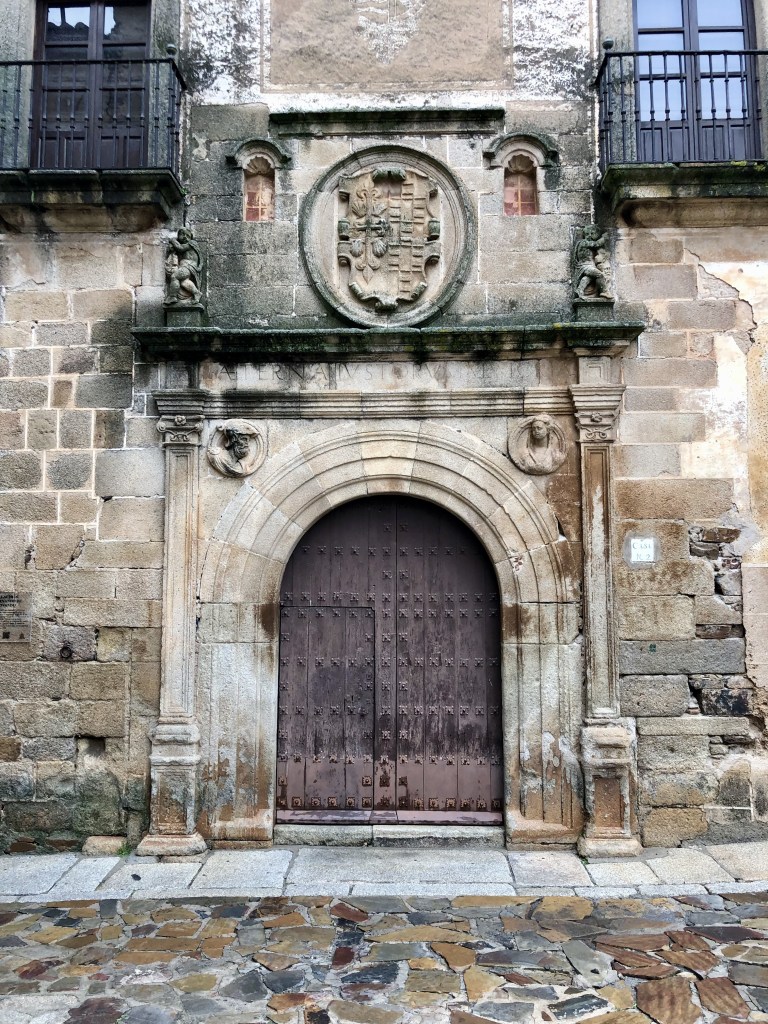
In teaming rain I explore its renaissance palaces. Stone walls as wide as the streets they sit in and colossal bronze doorways, each distinguished by its own family shield. I realise that Extremadura’s farmers became conquerors. The Roman Via de la Plata became a river of gold. Inca and Aztec riches flooded north via Cáceres into other parts of Iberia. They funded the growth of an empire, centralised its leadership and secured Spain’s future as a nation.
The rain continues for six days and I’m reminded by a local waiter called Juan that it’s critical for next year’s crop. In a province where farm to fork is a very literal practice, predictable seasons are key. Still, the weather thwarts some plans. I postpone a visit to Monfragüe Park, prioritising history books and delicious food from midday onwards. I sip too much Pedro Ximenez and siestas slip into three-hour affairs.
I squelch around Merida, the old Roman capital. Seeking shelter in its stunning contemporary museum. One of the world’s largest roman collections. I mooch in Trujillo. A mountain monastery town exposed to the elements, from where Francisco Pizarro left to conquer Peru’s Inca empire. I munch pan con tomaté and reminisce in Don Benito. A country town close to my heart that draws on its fertile fields and friendly people as its main trading currency.
I being to understand why those Golden Age farmers fled. Life can still be tough in this part of Spain. Some people are always one poor crop away from financial stress. Regardless, those young men who bought into rumours of glittering treasure across angry oceans were arguably the making of modern Spain.
Madrid: Modern Spain After Franco
Like a nervous system feeding the brain, all trains pulse into Spain’s capital. I arrive across its high plateau on a typically crisp December morning.
Madrid was born as a Moorish outpost and grew rapidly with the Renaissance, as monarchy moved in and empirical administration was centralised. Although perhaps its true rebirth began with Franco’s death in 1975. Freedom from the dictatorship sparked a cultural resurgence known as La Movida Madrileña. While southern cities sparkle with the trappings of caliphates and empire, Madrid’s buildings are statements of a more modern power. The opulence of its royalty and the wide, symmetrical facades of Franco’s regime. Over forty years since its collapse, the dictator still looms large from his austere vantage points.
I spend a morning at Reina Sofía art museum with Dalí, Miró and Picasso for company. Finally appreciating the latter’s Guernica. Depicting the annihilation of a Basque town during the civil war, it’s so brutally absorbing that an hour with its details is barely enough.
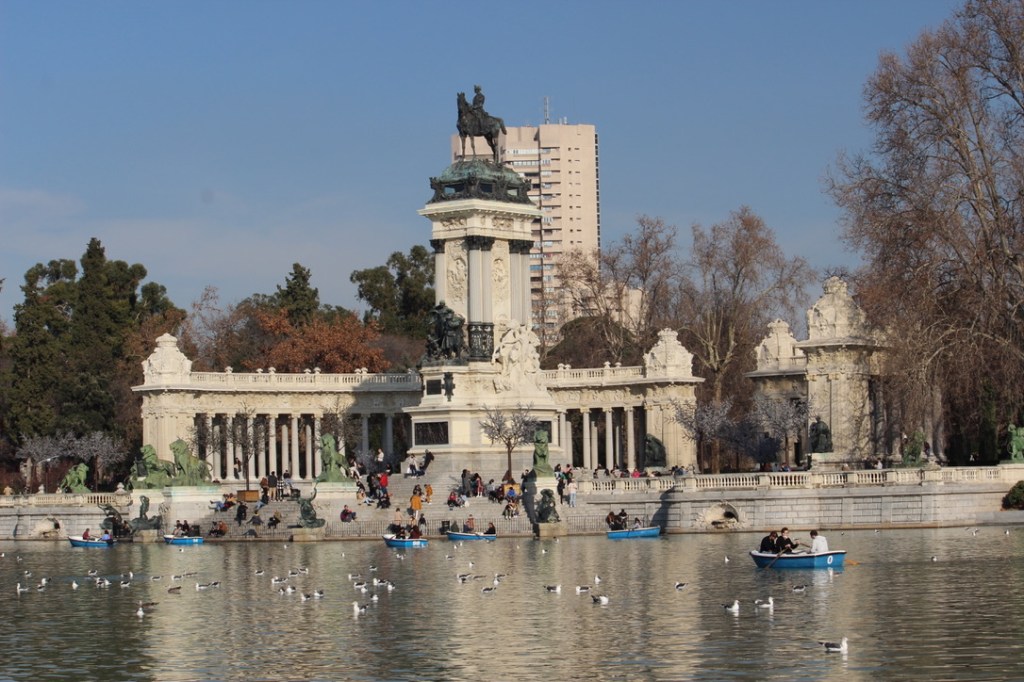
I walk the length of Retiro Park. Alfonso XII and I watch everyone row boats around its lake. He’s known as the Peacemaker. A symbol of relative calm after years of royal exile, turmoil and revolution in the early 19th century. I eat around the capital’s indoor markets. A culinary review of my journey to date: Gambas pil pil have been brought up from Seville that morning. Glistening ibérico is fresh from Merida. And Pintxos – a Basque speciality – give me wanderlust for a northern coast I’ve yet to explore.
One evening I treat myself to dinner at LHardy. I guzzle copious portions of sopa de fideo and the city’s namesake stew. People have been stuffing themselves here since 1839. Famous politicians, spies and royalty have all sat down before me so my meal’s significance goes beyond food. Here, the leader of the second Spanish republic was chosen. If there’s a place to finally break my Spanish rule of no large evening meals, it’s LHardy.
On my final night I welcome a new year in Puerta del Sol and wonder what’s next for Spain. All around me Madrileños once again celebrate freedom. Not from a dictator but from the grip of a global pandemic. After experiencing loss and uncertainty they now seem joyful together.
For me this country’s appeal lies in its patchwork of unique regions. Each rich in their own way. Each with their own story that tethers to that of its neighbour. Each with increasing autonomy. Although as we go further into the 21st century, cementing that sense of unity which Madrid’s original government sought to create, may become Spain’s biggest challenge yet.